
A studio service
Black and white books for newborns.
For the first few months a baby cannot see much of what a picture book offers. Colour is still arriving, fine detail is out of reach, and focus sits at about the distance of the face holding them. What does land is contrast — a hard black edge against white. These are the books built for that window.
Contrast before colour.
N° 01What works at this age
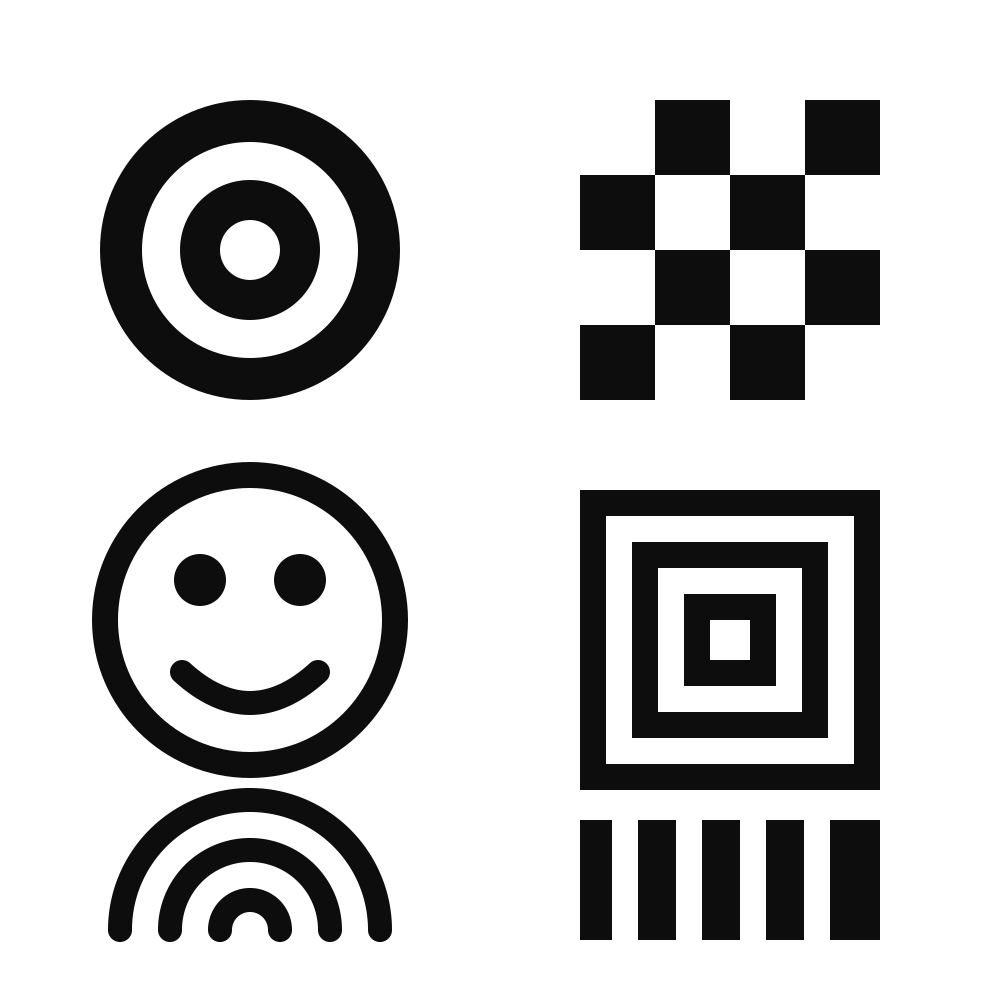
Six shapes that hold a newborn's eye.
01
The bullseye
Concentric rings give the eye a centre to lock onto and a repeating edge to track outward. The single most-used motif in newborn books, and the one infants tend to return to.
02
A face, reduced
Two dots, a curve, a circle. Newborns attend to face-like arrangements from very early on, and a high-contrast face outperforms almost any other pattern.
03
Checkerboard
Regular alternating squares produce the densest field of edges on the page. Useful in short bursts — it tires the eye faster than a bullseye.
04
Nested arcs and squares
Repetition at decreasing scale. The eye follows the nesting inward, which sustains attention longer than a single shape does.
05
Stripes
The highest-frequency edge you can print. Works best as an inverted panel — white on black — to break up a spread of black-on-white.
06
Nothing else on the page
One motif per spread, edge to edge. A busy high-contrast page is just noise; the whole point is that there is exactly one thing to find.
N° 02How we build them
Made for the distance and the mouth.
Design decisions at this age are physical before they are aesthetic. Shapes are sized to read at roughly 20 to 30 centimetres. Ink coverage is true black rather than a soft charcoal, because the contrast ratio is doing the work. Surfaces are matte — a glossy laminate throws nursery light straight back at the reader and cancels the contrast you just paid for.
We supply print-ready files for board, cloth, or a concertina that stands open on its own beside a play mat during tummy time. For self-publishers we handle the full package through to the manufacturer's specification; for families we design single keepsake copies.
N° 03Investment
Three ways to work together.
First high-contrast book
From $1,600
A 10–12 spread board or cloth book in pure black and white.
- Cover design
- Up to 12 interior spreads
- True-black ink specification
- Matte-finish print-ready files
- 1 round of revisions
Contrast to colour
From $2,600
A book that starts in black and white and introduces colour across the spreads — designed to stay useful past the newborn window.
- Cover design
- Up to 16 interior spreads
- Staged black-and-white → single-colour → full-colour progression
- Board or concertina format
- Print-ready files for any manufacturer
- 2 rounds of revisions
Personalised newborn set
From $3,400
A high-contrast book with the child's name set into the first spread, plus a matching cloth edition.
- Name in high-contrast display type
- Up to 16 spreads
- Board plus cloth edition
- Print-ready files
- Gift packaging design
- 2 rounds of revisions
N° 04Questions
The answers we give most often.
- Why are baby books black and white?
- A newborn's vision is still developing in the first weeks — acuity is low and colour perception is limited, so subtle tonal differences barely register. Strong black-against-white edges are among the first things an infant can reliably resolve, which is why high-contrast patterns hold their attention when a pastel illustration does not.
- At what age do babies start seeing colour?
- Colour vision develops gradually over the first few months, with most babies distinguishing colours reasonably well somewhere around three to five months. High-contrast books stay useful through that whole period — many families keep them in rotation well past six months.
- How far away should you hold a black and white book?
- Roughly 20 to 30 centimetres — about the distance from a held baby to the face of whoever is holding them. Books designed for this age should work at that distance, which means few elements per page and shapes large enough to read from close up.
- Are black and white books actually worth buying?
- For the first few months they hold attention noticeably better than colour books, and they are one of the few things a very young baby will look at for a sustained stretch. They stop being special once colour vision matures — so treat them as a short, useful window rather than a library staple.
- Board, cloth, or card?
- Board for durability and for propping open during tummy time. Cloth for the very youngest, and for anything that ends up in the mouth. We supply print-ready files for either, and can design a concertina format that stands up on its own beside a play mat.
- Can a high-contrast book be personalised?
- Yes, though it works differently than later. A newborn is not recognising their name — the personalisation is for the family. We usually set the name in bold high-contrast type on the first spread and keep the rest strictly to pattern, so the book still does its actual job.
Start your book
A book for the first weeks
Tell us whether it's a single keepsake copy or a title you plan to publish, and which format you have in mind. We reply within one working day.