
Comic & graphic novel illustration
You finished
the script.
Now it needs panels.
A studio for independent creators with a story written and nobody to illustrate it. Character sheets first, then thumbnails, pencils, colour and lettering — until what you have is a finished comic and a set of files a printer accepts.
Script in. Print-ready pages out.
Creator-owned work only — your characters, your world, your rights. Every project is scoped in writing and quoted per project, because a 12-page anthology short and a 200-page middle-grade graphic novel are not the same job.


Illustration styles on file
Flat and graphic, inked and washed, or fully rendered and cinematic — the look is chosen for your book before page one is composed.
We publish our own books
The studio writes, illustrates and publishes its own picture books at retail. Print specs, interior files and listings are weekly work here, not theory.
Stages, script to print
Script, thumbnails, character sheets, pencils, colour, lettering, files. You review at every stage, and corrections stay cheap because they happen early.
Creator-owned projects
Independent scripts, original casts and brand characters only. No licensed properties — so nothing in your book waits on somebody else's permission.
The art above is the studio's own — judge the hand before you brief it.
See the portfolioCompare the nine stylesN° 00Sequential work
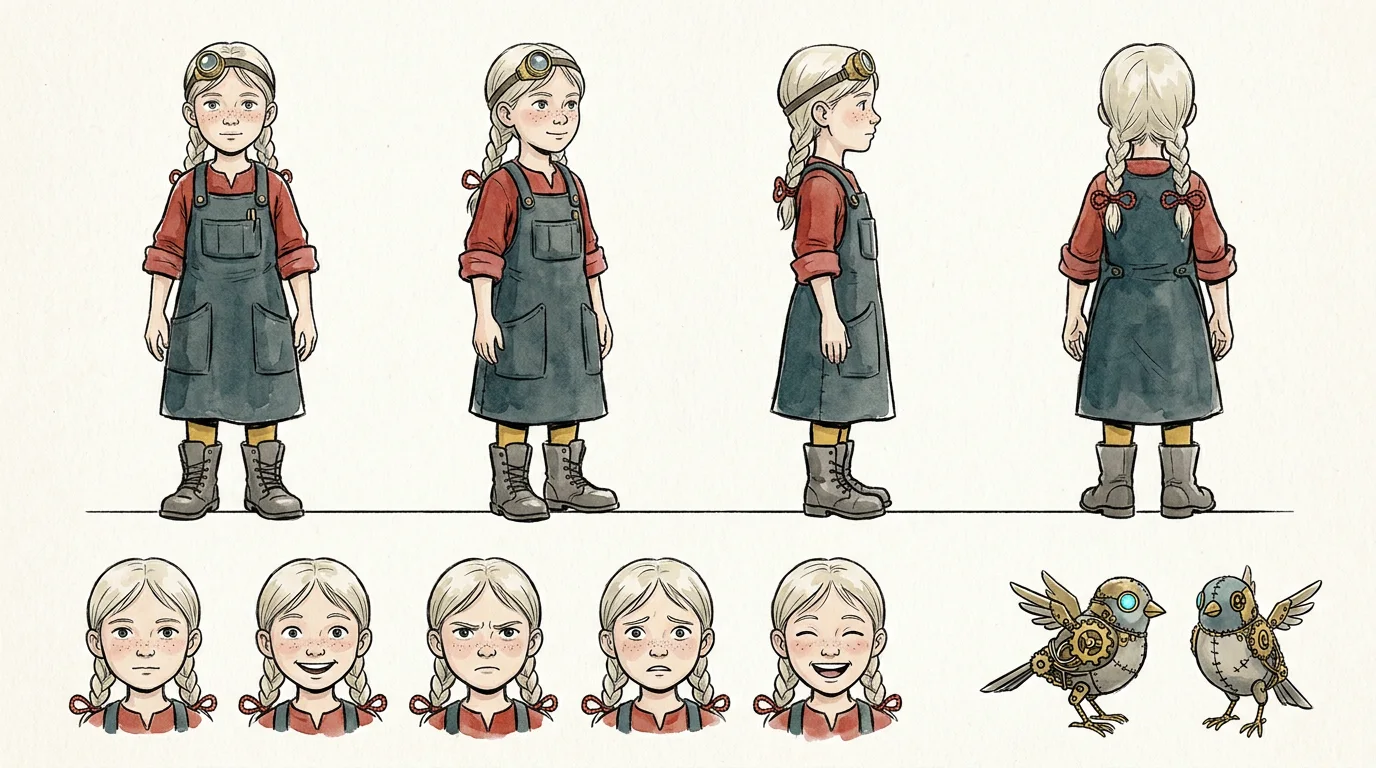
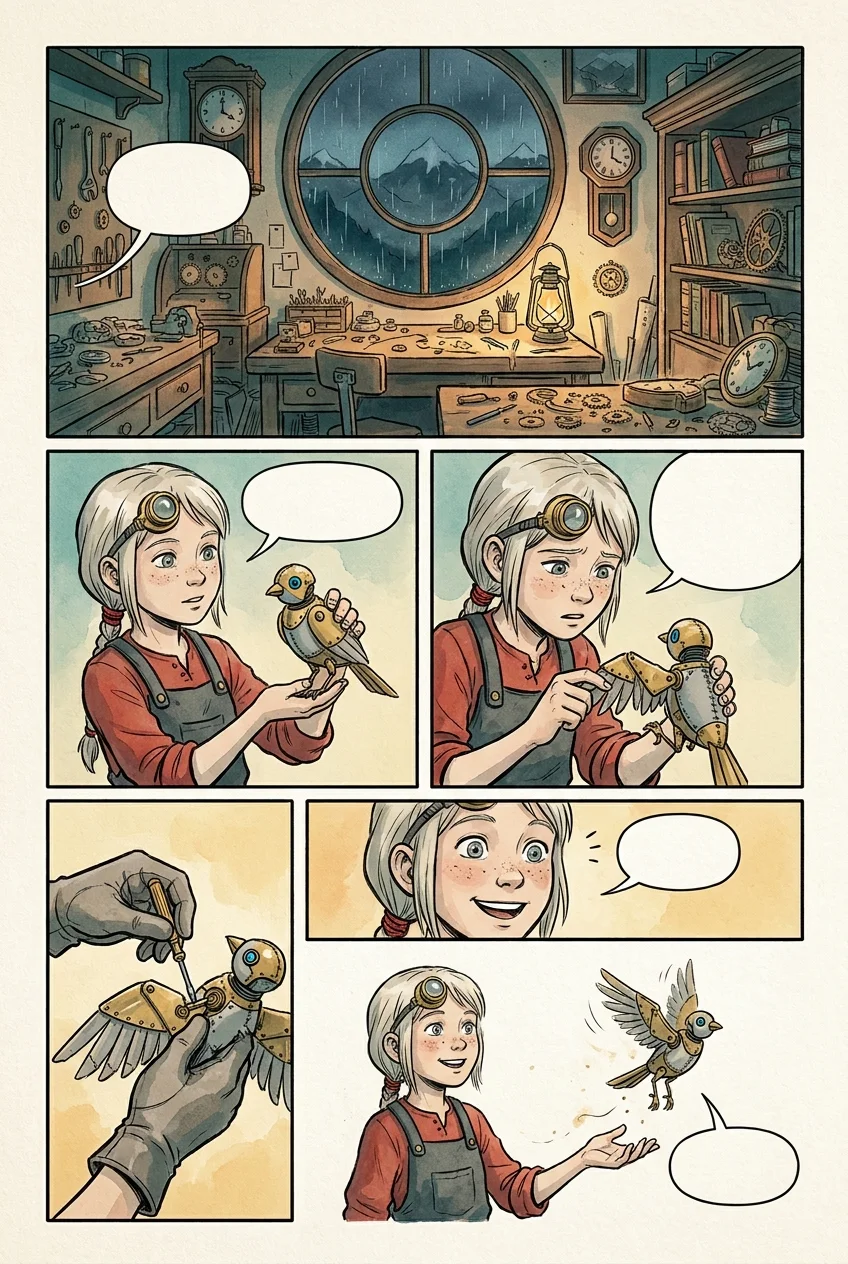
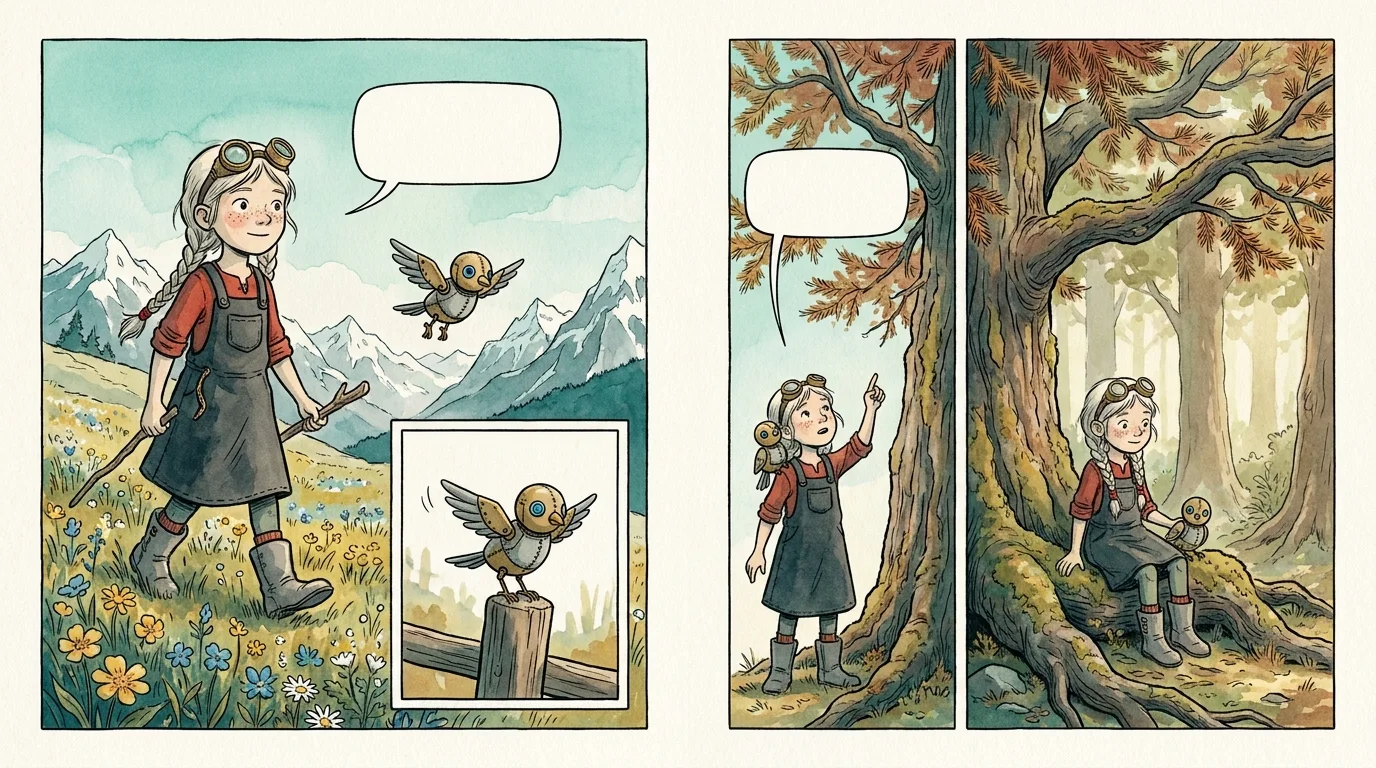
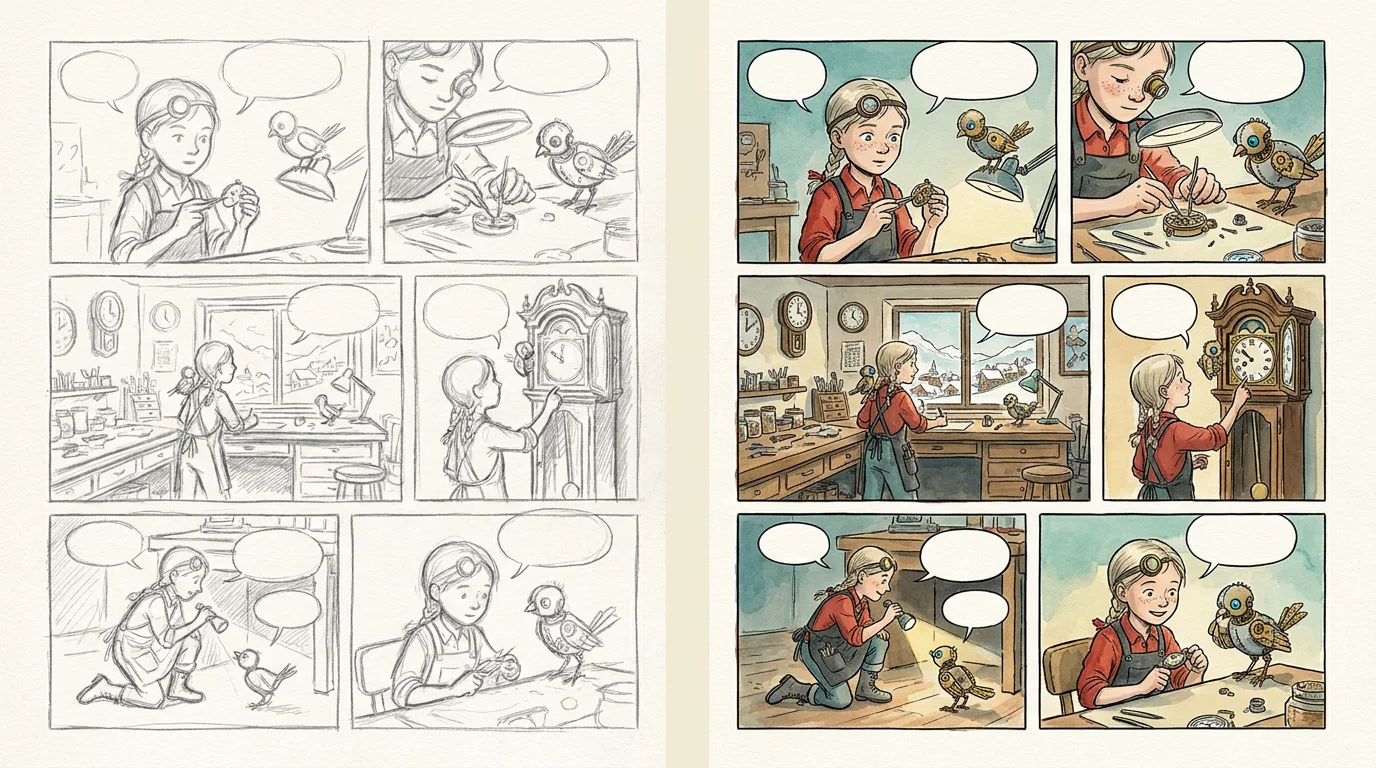
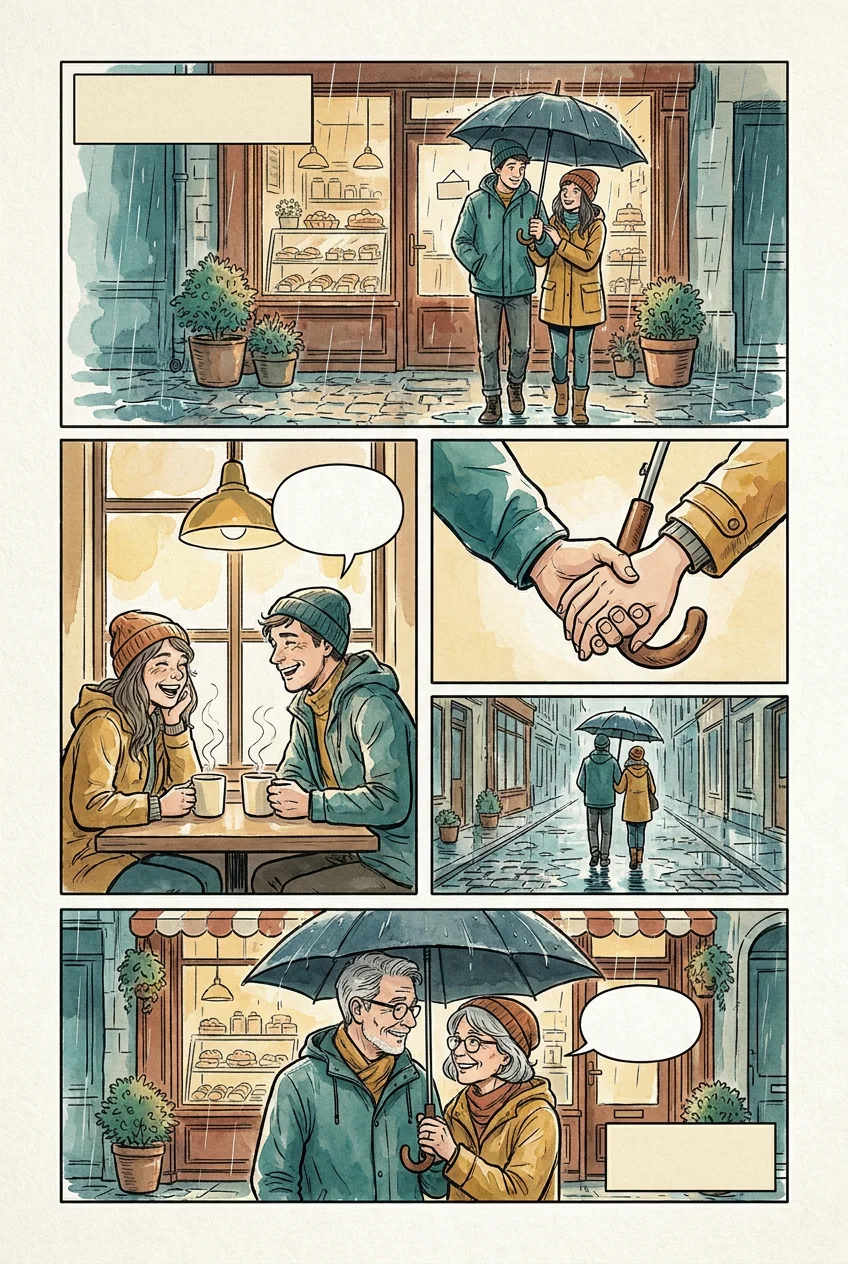
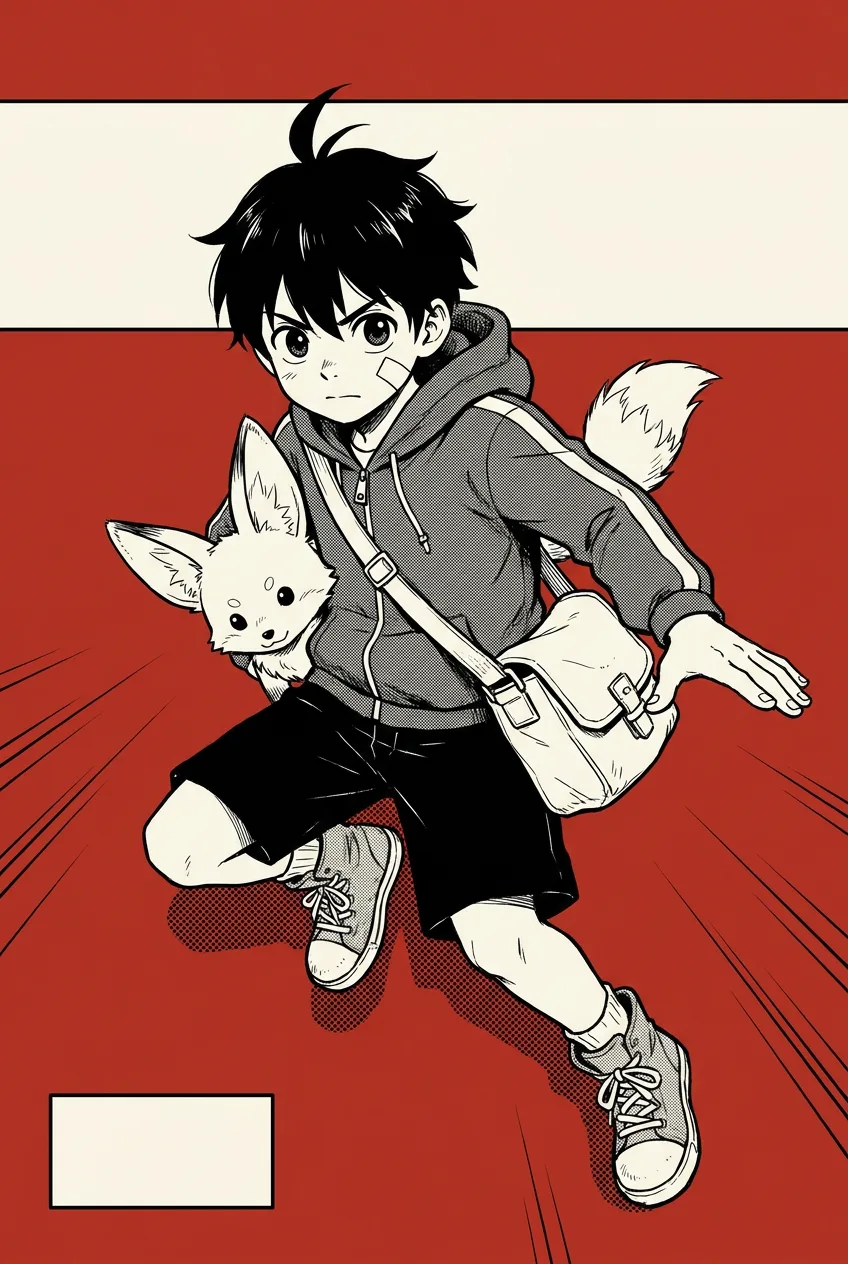
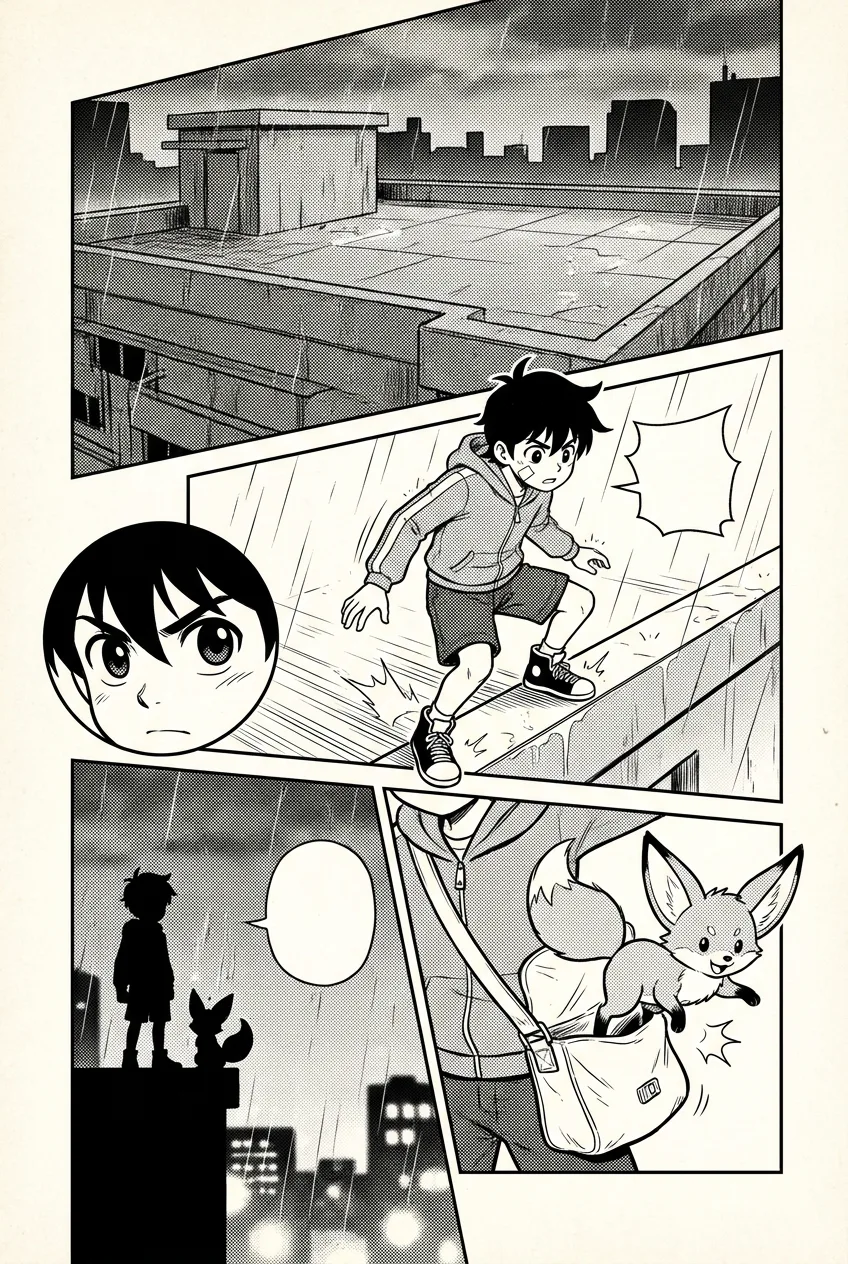
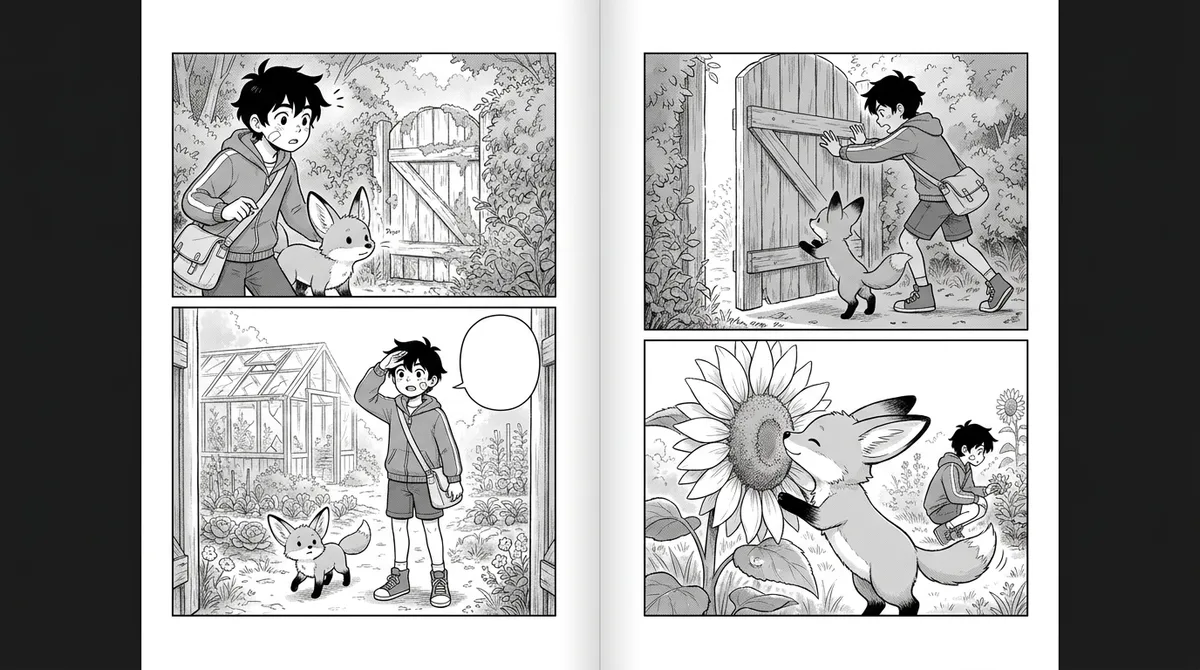
One character, four ways.
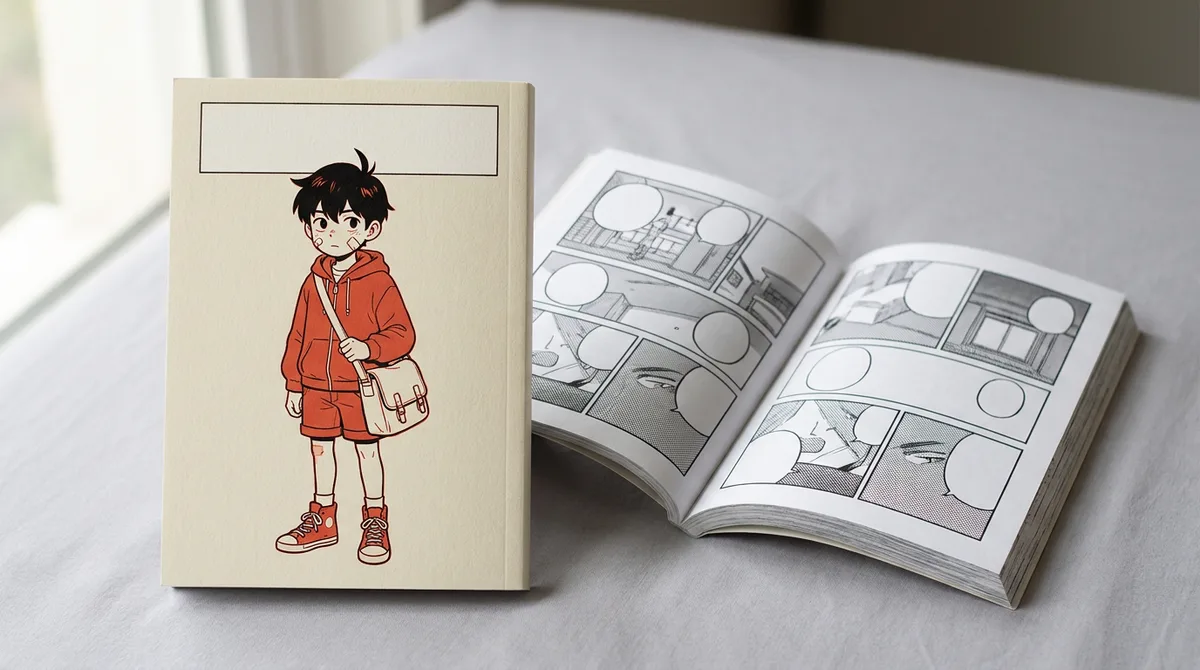
The same girl and the same mechanical bird run through all four pieces below — a model sheet proves nothing beside a page drawn from a different design. Balloons are left empty on purpose: a finished page arrives lettering-ready, with shapes placed and tails aimed, and the words set afterwards.
Studio demonstration pieces, made to show the process — not client commissions.
N° 01What the comic line covers
Five ways in, one production floor.
Most people arrive needing one of these and discover they need two. A graphic novel starts with character design. A pitch pack turns into a full book. Self-publishing support only matters once there are pages to publish. Take them separately or run the whole arc — either way it is one studio, one hand, and one quote per project.
Building a cast before you commission a book? The long-form guide walks through the same method we use on model sheets.
Read the character design guideN° 02How a comic gets made here
Seven stages, and you sign off on every one.
Fix it in thumbnails, not in finished art.
Script
You send the script, or the synopsis if the script is still moving. We read it for structure — how many pages the story actually wants, where the chapter breaks fall, which characters carry the weight.
Thumbnails
Rough page layouts, panel by panel, at a size small enough to change cheaply. This is where pacing gets fixed: a page that reads too fast, a beat that needs a full-width panel, a reveal landing on the wrong side of the turn.
Character sheets
Turnarounds, expression sets and height comparisons for every recurring character, signed off before a single finished panel exists. This is the document the rest of the book is checked against.
Pencils
Finished drawing on the approved layouts — staging, anatomy, backgrounds, props. You review a chapter at a time, and corrections here are still fast, because nothing has been rendered yet.
Colour
Flats first, then rendering and light. Palette scripts are set per chapter so a night sequence, a flashback and a bright interior each read as a distinct place, not as the same book with different filters.
Lettering
Balloons placed for reading order, tails aimed, captions and sound effects set on the art. Type stays live and editable to the last export, so a late rewrite is a text change rather than a repaint.
Print-ready files
Interior and cover exported to your printer's spec — trim, bleed, gutter, spine width, colour profile — plus web-resolution pages for pitching, and layered source files handed over at the end.
N° 03Why creators pick this studio
"A comic isn't a stack of drawings — it's one character, held steady for two hundred pages."
The thing that breaks a graphic novel is almost never the ambition of the script. It is page 90, where the lead's face has quietly drifted, the costume has lost a detail, and the reader stops believing in the person. That is why nothing here begins with finished art. It begins with model sheets — turnarounds, expressions, proportions, props — and every page after that is checked back against them.
The second reason is the shelf this studio actually lives on. We art-direct children's and middle-grade books all week, which means the questions specific to young readers are familiar rather than researched: how many panels a nine-year-old can follow, how large lettering has to be before it stops slowing them down, which reveals need the page-turn and which ones die on it. Graphic novels for that age band are a speciality here, not a stretch.
And the last stretch — the one that quietly ruins independent comics — is a road we drive ourselves. The studio publishes its own picture books, so spine widths, bleed, gutter loss on a thick interior and colour profiles are settled problems rather than a first-time gamble on your title. Bespoke work is scoped in writing and quoted per project; nothing on this page is sold from a rate card.
N° 04Before you brief us
What comic creators ask first.
I have a finished script but no artist. Where do we start?
With the characters, not the pages. Before a single panel is composed we build model sheets for your leads — turnarounds, expressions, height comparisons, costume notes — so the character stays the same person on page 4 and page 140. Once those are signed off, thumbnails go out for the first chapter and you can see the pacing before anyone commits to finished art.
Do you take on licensed characters or existing franchises?
No. The studio works on creator-owned material only: your script, your characters, your world, or a character you are building for your own brand. That keeps the rights clean and the conversation simple — nothing we illustrate for you depends on somebody else's permission.
How many pages can you take on?
Anything from a short story for an anthology to a full-length graphic novel, though long books are planned in chapters rather than quoted as one lump. A typical middle-grade graphic novel runs 150–250 pages, so we schedule it as a series of chapter deliveries with a review at the end of each one. Short commissions — a pitch pack of five to ten sample pages for submission to publishers — are a common way to start.
Do you letter the pages as well, or do I need a separate letterer?
Lettering is part of the pipeline. Balloon placement, tail direction, reading order, sound effects and caption boxes are laid out on the finished art, and the typography is chosen to suit the age band the book is aimed at. Lettering is set as live, editable type until the final export, so a rewrite late in the schedule is a change of text rather than a repaint.
How is a comic project priced?
Quoted per project, never off a rate card. The variables that actually move the number are page count, panel density, whether the book is in colour or greyscale, how many characters need model sheets, and whether you need print-ready files for a printer or interior files formatted for self-publishing. Send the script or the synopsis and we come back with a written scope and a fixed quote.
Comic & graphic novel illustration
Send the script. We'll send back a plan and a page count.
Tell us what you've written, who it's for, and roughly how long it runs. We reply within two working days with a scope, a schedule and a fixed quote for the project.